
From Silence to Selfhood – Supporting Neurodiverse and IDD Voices in Sexual Health and Advocacy
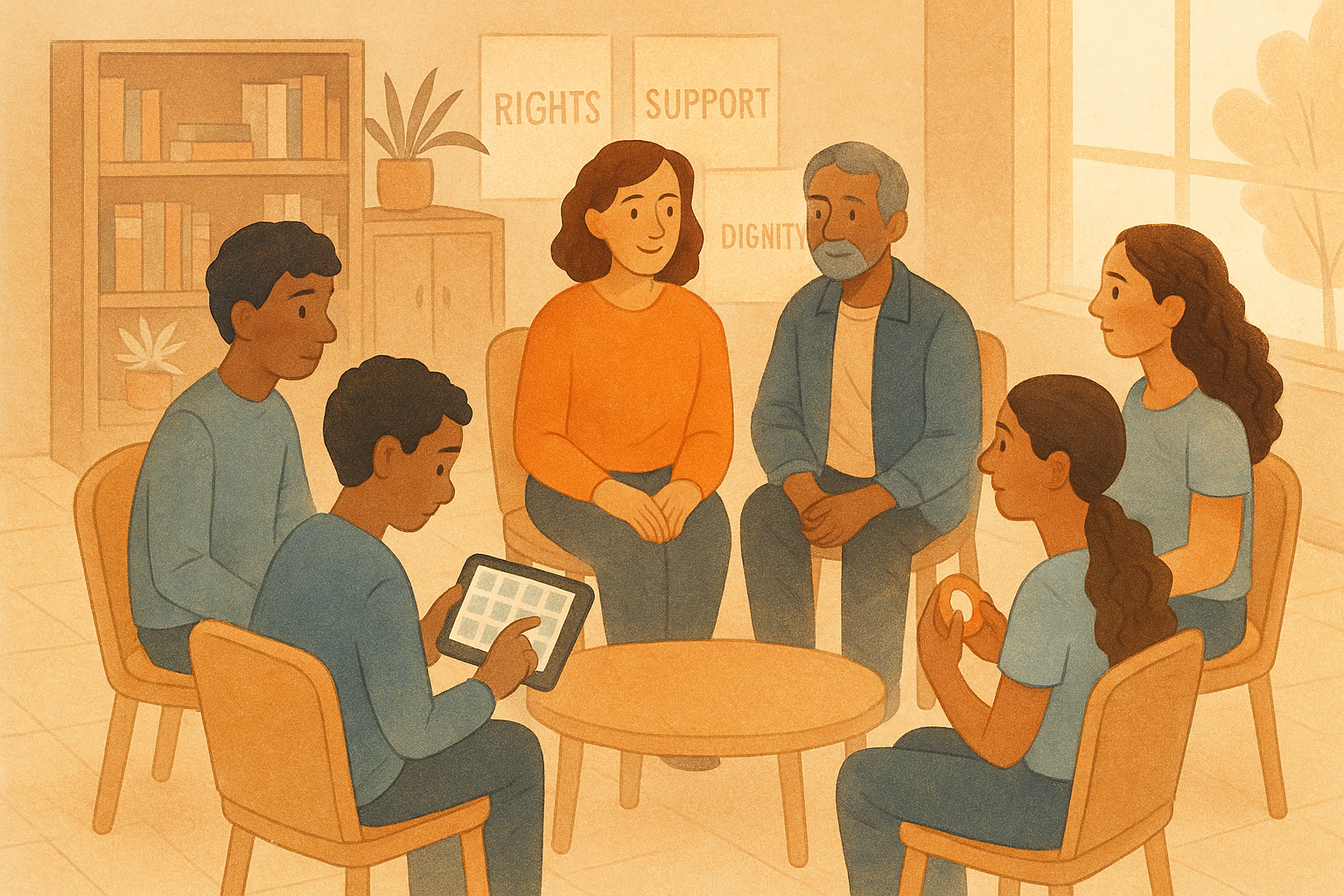
Dignity isn’t passive. It’s built into how we educate, how we provide care, and how we legislate. When systems ignore the sexual rights of neurodiverse individuals and people with intellectual disabilities, they send a message: your voice doesn’t matter.
But things are changing. Slowly, the field is waking up, not just to inequities, but to what equity actually looks like.
1. The Power of Self-Advocacy
Self-advocacy isn’t a soft skill. It’s a survival skill. And a 2025 mini-review published in Frontiers in Child & Adolescent Psychiatry shows that for autistic youth, self-determination strongly correlates with outcomes like academic success, personal well-being, and community participation.
Yet few programs intentionally build these skills.
The researchers call for self-determination practices to be embedded, not bolted on. That means real choices, real leadership roles, and real opportunities to speak and be heard.
🔗 Source: https://www.frontiersin.org/articles/10.3389/fpsyt.2025.00312/full
2. Why Neurodiverse Women Are Still Overlooked
In sexual health research and services, neurodiverse women are often invisible. A comprehensive review found that they face higher rates of victimization, lack access to gender-sensitive care, and are consistently excluded from data sets that shape policy.
This exclusion isn’t just an oversight, it’s harm.
Researchers are calling for trauma-informed, gender-inclusive sexual health services that are built from lived experience, not assumptions.
🔗 Source: https://www.mdpi.com/2227-9032/10/3/740
3. Civil Rights in the Shadows
In one of the most compelling critiques of our current systems, the Columbia Law Review’s analysis of “structural desexualization” outlines how guardianship, service systems, and special education programs have been used to suppress, not support, sexual agency for people with disabilities.
This isn’t protection. It’s disenfranchisement.
The paper calls for systemic reform and reframing under the Americans with Disabilities Act, treating sexual agency as a protected civil liberty.
🔗 Source: https://columbialawreview.org/content/structural-desexualization
Building Systems That Listen
Here’s how we start shifting from silence to selfhood:
Teach decision-making early. Embed self-advocacy and goal-setting into school, home, and clinical environments.
Create trauma-informed, gender-aware services. Make space for neurodiverse women to be seen, heard, and supported.
Legislate sexual agency as a right. Guardianship and service systems must be reformed to center, not erase, choice.
Autonomy doesn’t grow in silence. It grows where people are allowed to speak, act, and live on their own terms.