

Our Blog
Scroll down to explore all our past posts!

When a Client with ID/DD Comes Out: A Guide for Supportive Practice
When a client who has intellectual and/or developmental disabilities (ID/DD) shares that they are gay, bisexual, or transgender, it can be a meaningful moment of trust and disclosure. How a support professional, caregiver, or ally responds in that moment can have lasting impact on the individual’s sense of identity, dignity, belonging, and mental‐health.

Celebrating Sexual Orientation & Gender Identity in People with Intellectual & Developmental Disabilities
People with IDD have often been assumed to be asexual, heterosexual, or cisgender—assumptions that erase their identities, needs, and humanity (LGBTQ+ People | Intellectual Disability Mental Health Connect, The Arc).

How to Support Someone with ID/DD Around Pornography: Respectful Guidance and Healthy Conversations
Pornography is widely accessible online, and many adults—including those with intellectual and developmental disabilities (ID/DD)—will encounter it. Therefore, it’s important for caregivers and supporters to talk about it openly, respectfully, and with accurate information.

Understanding Sexually Maladaptive Behaviors and Their Impact on Families: Coping Strategies for Support and Healing
Sexually Maladaptive Behaviors can be confusing and stressful for families. Learn what they mean, how they affect relationships, and practical coping strategies supported by professional resources.

Navigating Sexual Health Resources for Individuals with Intellectual or Developmental Disabilities (ID/DD)
Sexual health is an integral part of life for everyone—including those with intellectual or developmental disabilities. With the right supports, education, and respect for rights, individuals with ID/DD can access meaningful relationships, make informed decisions, and express their sexuality safely and positively.

Providing Age-Appropriate, Accessible Sexuality Education for People With ID/DD
Sexual education is not optional for people with ID/DD—it is a fundamental component of safety, dignity, and human rights. By assessing knowledge respectfully, teaching clearly and concretely, and supporting autonomy, caregivers and professionals can empower people with ID/DD to build healthier, safer, and more fulfilling lives.

How Intellectual and Developmental Disabilities Can Impact Sex Drive
Sex drive in adults with intellectual and developmental disabilities does not follow a one-size-fits-all pattern. Some may experience high levels of sexual desire (hypersexuality), others low desire (hyposexuality), and many may fluctuate or fall somewhere in between depending on life stage, health, environment, and education.

Supporting Adults with Developmental Disabilities With Informed Consent
Those of us supporting people who experience intellectual and developmental diversity (disabilities) must learn how to address informed consent in all areas of their lives - including their relationships and sexuality!

Understanding Relationship Models and Tools for Supporting People with Intellectual and Developmental Disabilities (ID/DD)
Relationships aren’t just nice to have—they matter deeply for belonging, identity, and quality of life. People with ID/DD deserve the same richness of connection that many people take for granted.

Understanding Autism: Sensory-Seeking & Sexuality
If you’re supporting a teen or adult who experiences Autism it’s important to understand how their sensory needs might impact and intersect with their sexuality.

Why Trauma-Informed Sexuality Education is Essential in Behavioral Health Today
Our clients don’t always know how to express boundaries, ask questions, and seek help when needed. We need the tools to approach these conversations with confidence, clarity, and deep respect.

Integrating Behavioral Health and Sexual Self-Determination for People with IDD
People with IDD deserve systems built around their autonomy, not around managing perceived limitations.

Help Protect Comprehensive Sexuality Education
Comprehensive sex education (CSE) is under growing attack, often from the same groups pushing to ban books, silence LGBTQ+ voices, and restrict inclusive learning.
Here are concrete steps you can take to support and protect comprehensive sex education in your community…

Nurturing Confidence Through Sensory-Friendly Sex Education & Self-Advocacy
Sexuality education is too important to leave out neurodiverse learners. Yet traditional classrooms are often overwhelming with harsh lighting, rapid discussions, and jargon-heavy lectures. There’s a better way…

From Silence to Selfhood – Supporting Neurodiverse and IDD Voices in Sexual Health and Advocacy
When systems ignore the sexual rights of neurodiverse individuals and people with intellectual disabilities, they send a message: your voice doesn’t matter.
But things are changing. Slowly, the field is waking up, not just to inequities, but to what equity actually looks like.
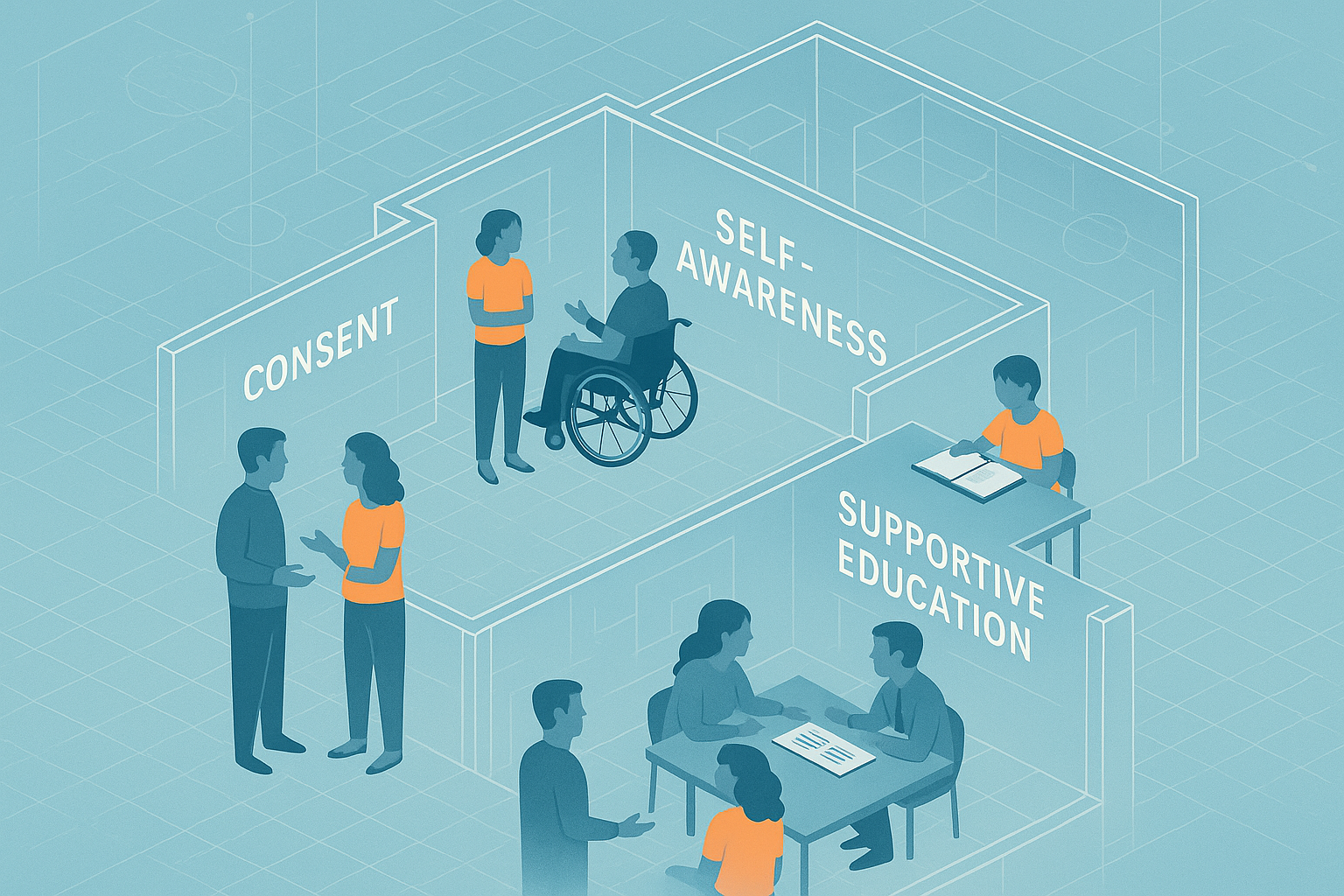
The Architecture of Autonomy – Designing Real Systems for Sexual Rights and Self-Determination
For too long, autonomy for people with intellectual and developmental disabilities (IDD) and neurodivergent individuals has been treated as a hypothetical.
To move forward, we need systems that trust people to grow, not simply protect them from harm.